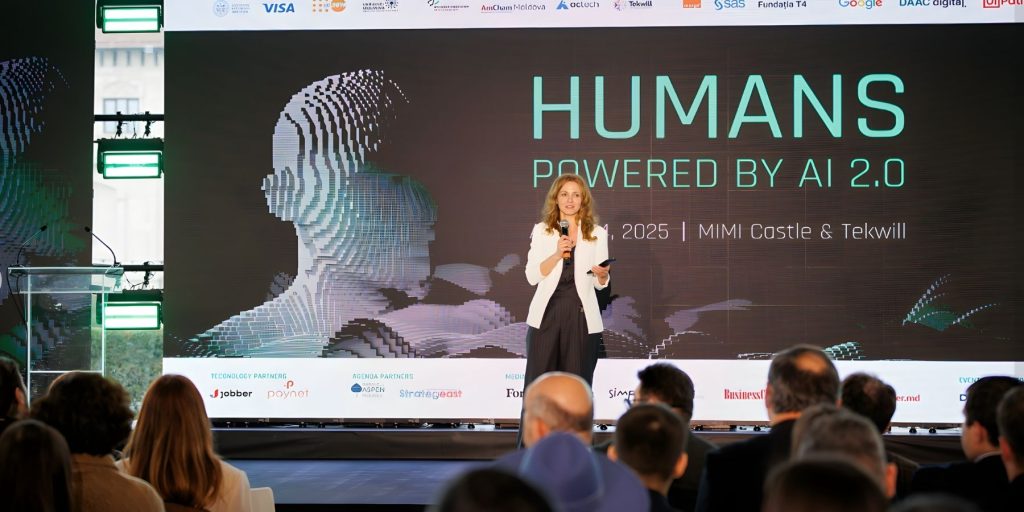
Daring to try

Ana Chirița helped lay the groundwork for Moldova’s IT Park—then watched it exceed every expectation.
The Moldova Innovation Technology Park was built through collaboration. The government, the National Association of ICT Companies in Moldova (ATIC), and development partners spent years creating the legal framework and infrastructure. When it launched in 2018, expectations were modest—perhaps 400 companies would join. It now hosts over 2,600, contributing 4.7 per cent to the country’s GDP. The difference between expectation and outcome tells you something about Moldova’s technology sector—and about the people who helped build its foundations.
Ana Chirița was amongst them. Working at ATIC, she contributed to the feasibility study, documentation, and creation model in 2017 and 2018. She helped create the initial identity, legal documents, support materials, communication channels, website. The park has evolved substantially since then, developing its own momentum. But someone had to help build the machine before it could run.

Chirița, now Strategic Projects Director at ATIC, has managed a portfolio of approximately 30 million dollars over the past decade. Through programmes she designed, more than 250,000 people have participated in various activities. More than 1,600 teams have gone through entrepreneurship support. Moldova’s tech sector grew from “a very, very small unknown, not even industry, nothing” into the most competitive and recognised profession in the country.
The IT Park story begins in 2013, when Chirița served as executive director of ATIC. Association members identified two problems: fiscal regime and workforce. “We actually had fiscal incentives, but we were all thinking of something different,” she explains. The goal was a special regime with a flat seven per cent tax rate. “It was a combined effort between the ministry, the association, and a few development partners.” Four years of advocacy followed. In 2017, the law was approved. The results exceeded all projections. Moldova’s IT sector has increased its export volume fivefold since 2016, surpassing growth rates of Estonia, Belarus, Romania and Ukraine. IT service exports have grown tenfold since the Park’s inception, with resident companies paying over 335 million dollars in taxes between 2018 and 2024.
“I’m very proud of the path that the ICT sector has followed in this country,” Chirița says. The pride is justified. Creating legal and fiscal frameworks that actually work is rare enough. Creating frameworks that exceed expectations by a factor of six is rarer still.
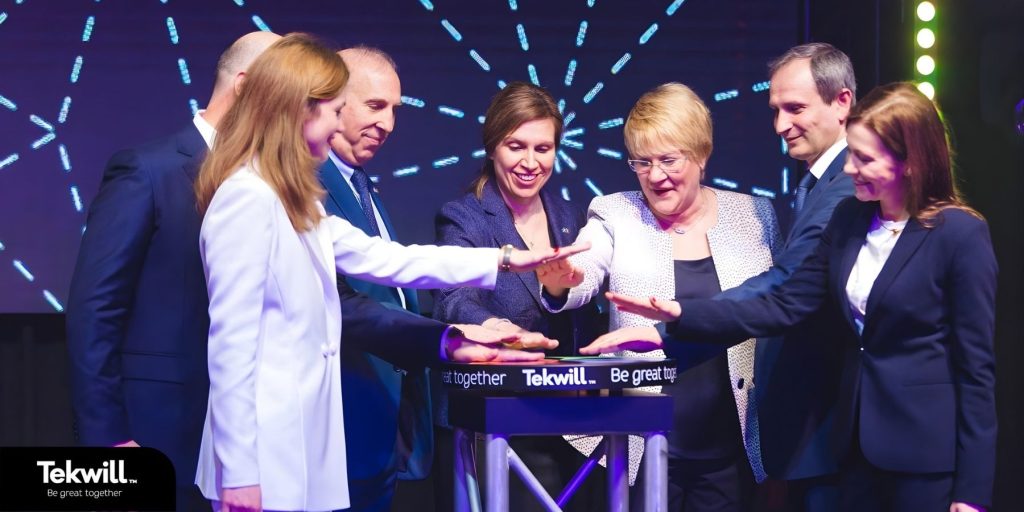
But frameworks alone don’t build an industry. One of ATIC’s largest projects is Tekwill, a national public private partnership that responds to the needs of the ICT industry through educational development and supports the entrepreneurship ecosystem. TechWill operates with different divisions targeting specific groups: children, schools, adults, women. Some programmes are paid services that self-sustain. Others, like the Tekwill in Every School programme, function as social initiatives. “We run in 576 schools in Moldova so that’s approximately 60 per cent of all schools and probably 90 per cent of high schools.”
Demonstrating possibility
The scale matters because Moldova’s tech sector faces the same challenge as every other emerging market: cultural expectations that discourage women from technical careers.
“Often in our country, and I think that’s specific of developing countries, girls and women are very much influenced by their fathers or partners,” says Chirița. “A lot of families still have this traditional approach—a future woman that needs to get married, have children and choose something that is more womanly.”
Role models counter this by demonstrating possibility. “Having girls and women as role models who chose a career in tech shows what’s possible,” says Chirița. The goal, she adds, is choice. “You can do anything. If it makes you happy just to be a wife and a mother, that’s absolutely fine. Nobody has anything against it. But if it makes you happy to do something else, why not?”
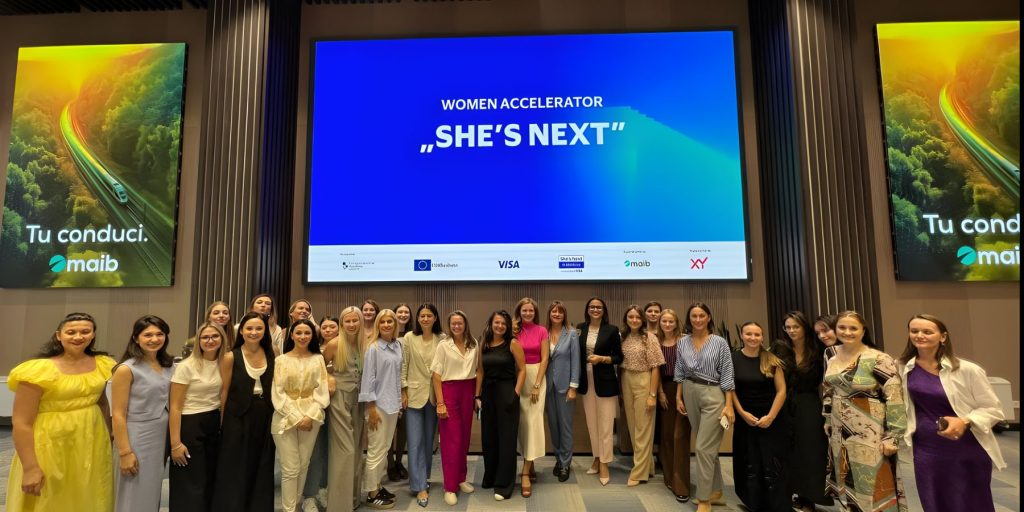
The data from Tekwill’s schools programme reveals the cultural pressures. “At age 12, 13, or 14, the ratio of girls to boys choosing STEM subjects is 50:50,” adds Chirița. “Once the age grows towards 15, 16, 17, more boys are choosing STEM subjects than girls.” The shift suggests community influence plus, “the fear not being accepted. We encourage them to actually go further.”
Chirița practices what she advocates. Beyond her work at ATIC and Tekwill, she mentors start-ups and invests as an angel investor, typically selecting two to three companies per year. She focuses on early-stage teams with potential to scale beyond Moldova. “I look specifically for teams and ideas in which I see potential,” she says.
Her experience mentoring at the She’s Next hackathon proved instructive. She worked with five women from across the region: Kazakhstan, Armenia, Serbia. “All five women needed help to prepare for the pitch competition. So I had to go through every single step with them.” All of the ideas were very good, she says, but adds: “It’s not about the idea, it’s about the implementation.”
‘There are people who can help’
For women entrepreneurs in the region, Chirița’s advice comes direct. “First of all, it’s about daring to try something. If they have ideas, try to seek support.” The emphasis on support is intentional. “If they feel that they are alone, they should know that they are not alone. There are lots of other people who can help, men and women.”
Her second piece of advice follows logically. “Believe in their specific ideas if that’s the case.” Failure doesn’t end the story. “If they do not win, if they fail, that doesn’t mean that their business will not develop further. Any failure is just another step to adjusting your own idea and adjusting your own business to make sure that it actually works.”
Chirița’s career demonstrates this principle. The IT Park took four years of advocacy to create. Tekwill required building an organisation from nothing. Each programme she designed needed funding, partners, implementation, measurement, adjustment. None of it happened because someone decided Moldova should have a tech sector. It happened because specific people—Chirița prominent among them—spent years building the infrastructure, the programmes, the networks, the culture.
The scale of what she accomplished is visible in the existence today of a sector that barely existed a decade ago. But the scale is also visible in smaller details: five women mentored at a hackathon, presentations reviewed and returned with feedback, one entrepreneur in Kazakhstan who lost one competition and won another.
“Dare to try something,” Chirița says again. The advice sounds simple until you consider what trying actually requires: four years of advocacy, building organisations from nothing, managing millions of dollars, reaching hundreds of thousands of people. She did it anyway. That’s the point she’s making.
New Free Courses — Made for Ambitious Women Entrepreneurs!
It’s time to grow smarter, adapt faster, and take your business global.
Explore two powerful courses available exclusively to She’s Next members:
The Reinvention Masterclass for Start-up Founders
Beyond Borders: Building for Global Success
Enroll today — it’s free!