The 900 US dollars January

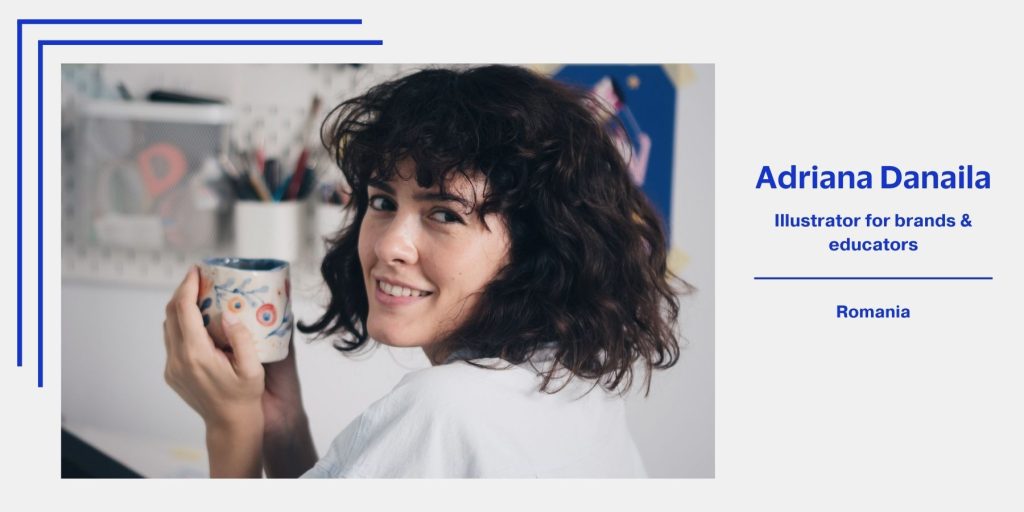
Some years, Adriana Dănăilă can earn 100,000 US dollars as a freelance illustrator. She shares what happened when the work dried up
Adriana Dănăilă started 2025 with a 900 US dollars month. She’d taken a semi-sabbatical in 2024, but previous years had been good: 100,000 US dollars in 2022, 66,000 Us dollars in 2023. Adriana didn’t panic, however. Instead, she did something unusual. She posted about it publicly.
“Transparency was my way of not letting scarcity grab the wheel again,” she explains. The admission ran counter to established freelancer wisdom, which dictates projecting constant success to attract premium clients. But Adriana had spent 14 years building her career and had learnt that pretending never works as well as people think. That 900 US dollars month eventually led to a 10,000 US dollars month. More importantly, the transparency made people trust her more, not less.
The moment that shifted her career from survival to something sustainable came earlier, after she had saved three months of living expenses. “That tiny financial buffer completely rewired how I showed up to work,” she says. The change was immediate. “Suddenly I wasn’t negotiating from panic mode anymore. I could say no to projects that didn’t align with the future I was trying to build, and I finally had the courage to ask for the rates I actually deserved.”
Emotional bandwith
The buffer matters because most freelancers work without safety nets. The standard advice focuses on portfolio quality, networking, pitching. Adriana discovered that emotional bandwidth—the ability to negotiate confidently rather than desperately—trumped all of that. You cannot negotiate well when you need the money immediately.
Her rise to the top one per cent on both Upwork and Fiverr, working with clients such as Johnson & Johnson and Mars, came from understanding something specific about what she was actually selling.
“Once I learnt how licensing, copyright, and brand IP really worked, I stopped underselling myself,” she notes. “I showed up to calls with way more confidence because I finally understood what I was actually selling—not just illustrations, but brand IP, which is a seriously valuable asset.”
The distinction matters. Freelancers selling time get paid like workers. Freelancers selling intellectual property get paid like businesses. “When you know your value and you can have a professional, no-drama conversation about budget and usage, premium clients feel safe trusting you with their brand,” Adriana says. The shift is psychological as much as commercial. Clients sense when someone understands the game.
She is currently building six income streams, though with characteristic honesty she notes: “To be fully transparent, none of them have a positive ROI yet.” This year she launched paid newsletter subscriptions and landed her first brand sponsorship. After 14 years of freelancing, she knows that “the things that pay off the most usually take the longest to build.”
What surprised her was the speed with which the new streams started earning anything at all. “I always assumed you needed a giant audience before you could monetise your knowledge or get noticed by brands. Turns out that’s a myth. You just need consistency, and something genuinely useful to say.”
Her advice for anyone adding a second income stream: “Pick something you can commit to for at least a year. Not the shiny thing, not the ‘maybe it’ll go viral’ thing—the sustainable thing. Slow ROI doesn’t mean bad ROI.”
A life outside of work
Her solution to burnout is equally unconventional. “I stopped chasing ‘success theatre’ and I stopped tying my whole identity to my career,” she explains. After her first 100,000 US dollars year, she felt pressure to repeat it—”not because I needed the money, but because I thought it proved something.” Instead of scaling herself into exhaustion, she learnt about money, stopped overspending, invested, and started petsitting around Europe. “Zero regrets.”
The reframing is deliberate. “Now I’m a whole human with a life outside of work. When your validation doesn’t depend on your output, burnout doesn’t really have anywhere to land.” This runs counter to the hustle culture that dominates freelance discourse, where constant productivity equals professional legitimacy. Adriana rejects the premise. Being an illustrator is what she does, not what she is.
On AI, her position is pragmatic. “AI made me realise that originality isn’t in the tool—it’s in your taste,” she says. “I don’t worry much about protecting my authentic voice. I just stay aware of what I actually like and how I see the world.”
More importantly, AI removes the pressure to be competent at everything. “Before, we felt like we had to be good at everything—design, admin, writing, marketing, strategy—or we weren’t ‘real professionals.’ Now you can lean into the one thing you’re genuinely strong at and let AI handle the parts that used to drain you.”
Creating space for women
Adriana mentored at the Visa She’s Next Hackathon Grand Final and noticed something specific. “What impressed me most was seeing women who didn’t even feel confident in their English still show up and pitch their ideas. That takes courage.” The platform removes what she calls “the intimidation factor”. Traditional business networks cater to people with polished presentations and perfect vocabulary. She’s Next creates space for women still figuring things out.
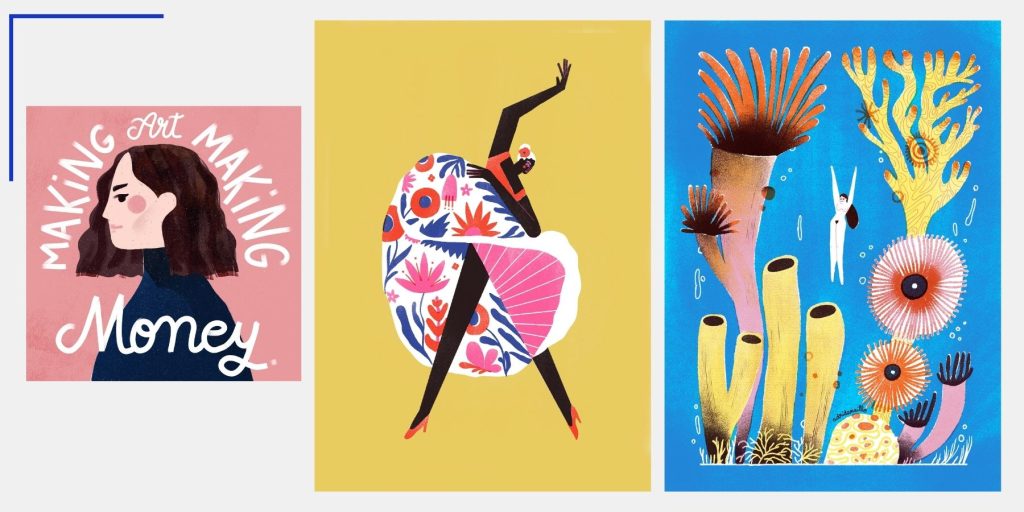
Looking back across 14 years, her core advice is blunt. “I’d tell myself to learn about money way earlier—and to actually talk about it. Get comfortable negotiating. Ask questions. Don’t whisper your rates.” The cultural programming runs deep, particularly for women. “Money isn’t a dirty word, and wanting to earn well doesn’t make you any less of an artist or any less of a woman. If anything, it gives you the freedom to make better work and live a better life.”
The 900 US dollars January sits oddly in a success story. Most people edit out the failures when recounting their achievements. Adriana includes them deliberately. The month happened after years of steady income, proof that creative freelancing never becomes entirely predictable. But the point isn’t the bad month. The point is what she did with it: posted publicly, kept working.
“Success” for freelance creatives has curious definitions. Adriana lives in her dream apartment, maintains multiple income streams, travels continuously, hasn’t burnt out in five years, works with Fortune 500 companies. And yes, she also had that 900 US dollars month. All can be true at the same time. The gap between them is filled with transparency, negotiation skills, understanding of intellectual property, emotional honesty about money, and a deliberate refusal to tie self-worth to monthly earnings.
None of this is what the freelance advice industry typically emphasises. Which is probably why it works.
New Free Courses — Made for Ambitious Women Entrepreneurs!
It’s time to grow smarter, adapt faster, and take your business global.
Explore two powerful courses available exclusively to She’s Next members:
The Reinvention Masterclass for Start-up Founders
Beyond Borders: Building for Global Success
Enroll today — it’s free!