


The Importance of Feedback Loops: Listening to International Clients

When you work across borders, assumptions are costly. Feedback helps replace guesswork with insight — building trust while improving what you offer.
International clients bring different expectations shaped by culture, market norms, and experience. Without a clear way to listen, small issues can turn into misunderstandings. With it, relationships deepen. This guide shows how to create simple feedback loops that help you learn faster, communicate better, and strengthen long-term international partnerships.
Understand what a feedback loop is
A feedback loop is not a one-off question — it’s an ongoing, two-way process.
It starts with listening, but it only works when insight leads to action. Regular feedback helps you spot gaps early, refine how you work, and show clients that their perspective matters. The key takeaway: feedback isn’t about approval — it’s a practical tool for improving collaboration and results.
Create simple and accessible ways to collect feedback
The easier feedback is to give, the more useful it becomes.
Effective options include:
> Short follow-up emails after meetings or deliveries
> Quick calls or voice notes for clarification
> Simple surveys at key milestones (project completion, delivery, renewal)
Keep questions short and clear. Be mindful of language differences and time zones. Respect your client’s time — clarity encourages participation.
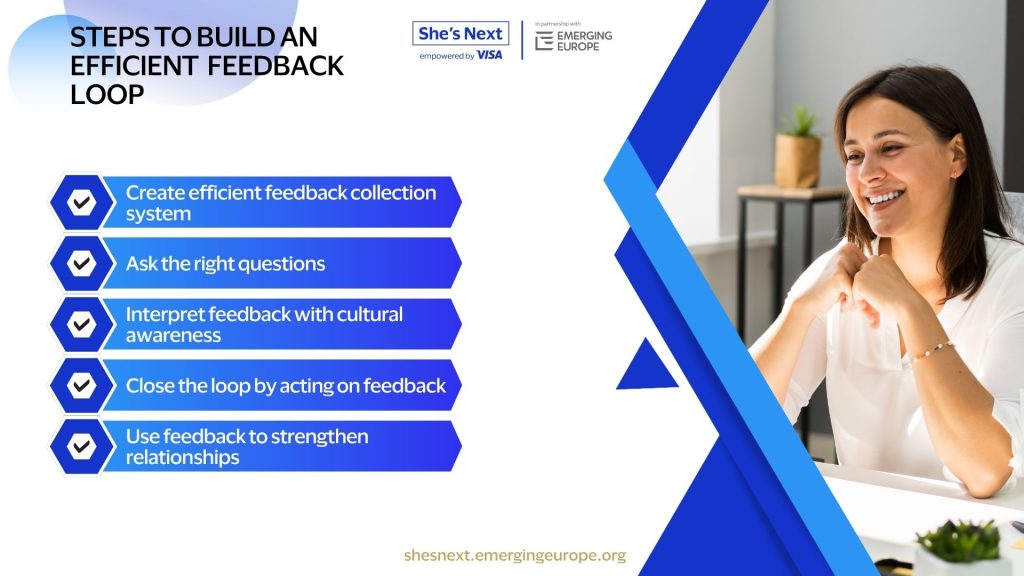
Ask the right questions to get useful insights
Good questions lead to actionable answers.
Balance yes/no questions with open-ended ones, and focus on:
> Clarity of communication
> Quality of delivery
> Ease of collaboration
Helpful prompts include:
> What worked well in this process?
> What could be improved next time?
> What would make future collaboration easier?
Signal openness to change. Clients are more honest when they feel their input will be used — not defended against.
Interpret feedback with cultural awareness
Feedback doesn’t sound the same everywhere.
Some international clients communicate indirectly or soften criticism out of politeness. Others may be very direct. Avoid overreacting to isolated comments. Instead, look for patterns over time and across clients. Read carefully, ask clarifying questions when needed, and avoid assumptions about intent.
Close the loop by acting on feedback
Listening builds trust — action sustains it.
Acknowledge feedback received. When appropriate, explain what you’ll change or adjust. Even small improvements matter when they’re visible. Clients feel valued when they see their input taken seriously, not stored away.
Use feedback to strengthen long-term relationships
Feedback is a relationship builder.
International clients value responsiveness and professionalism. When they feel heard, they’re more likely to return, recommend you, and grow with your business. Strong feedback loops turn transactions into partnerships.
Listening is a competitive advantage in international markets. Feedback loops support continuous learning, reduce friction, and build trust across borders. With simple systems and an open mindset, you can turn client insight into long-term growth.
New Free Courses — Made for Ambitious Women Entrepreneurs!
It’s time to grow smarter, adapt faster, and take your business global.
Explore two powerful courses available exclusively to She’s Next members:
The Reinvention Masterclass for Start-up Founders
Beyond Borders: Building for Global Success
Enroll today — it’s free!