
The power of female networks in the CEE start-up ecosystem

Collaborative networks are proving more powerful than individual ambition in emerging ecosystems
The start-up landscape of Central and Eastern Europe (CEE) is undergoing a structural transformation. While the region continues to develop compared to more mature innovation hubs, one phenomenon stands out as both an underreported and increasingly influential driver of growth: the rise of female entrepreneurial networks and the expanding role of women in early- and growth-stage innovation.
Women remain underrepresented among start-up founders across the region, but their presence is steadily increasing. At the same time, support structures built around mentorship, peer networks and cross-border collaboration are beginning to demonstrate measurable, long-term economic impact. Together, they are reshaping how entrepreneurship develops in CEE and how founders access knowledge, capital and scale.
In young ecosystems the early stages of company building often reveal systemic gaps: limited access to investment networks, insufficient exposure to global markets and the absence of experienced leadership. For many women founders, these gaps are amplified. Structured mentorship programmes help close this distance by providing strategic guidance that is otherwise difficult to obtain within emerging markets.
Data from European innovation programmes suggests that women who participate in long-term mentorship initiatives demonstrate higher confidence in decision-making, greater clarity on market positioning and more accurate planning for international growth. Beyond individual skills, mentorship accelerates ecosystem maturity: founders equipped with informed leadership practices build stronger organisational cultures, attract better talent and navigate early scaling more effectively.
In the CEE region, where many companies operate with limited resources and volatile market conditions, this type of targeted guidance can significantly increase a start-up’s resilience and survival rate.
Female networks as a mechanism for ecosystem development
The growing influence of women’s networks is not limited to mentorship alone. It is the combination of structured peer groups, role models, community organisations and cross-border programmes that delivers the strongest impact. Initiatives such as She’s Next by Visa, EIT’s women-focused accelerators, and emerging regional communities in Poland, the Baltics and Southeastern Europe demonstrate that coordinated support is increasingly becoming an engine for innovation.
These networks perform several ecosystem-strengthening functions:
– knowledge transfer and capacity building; transforming practical experience into shared methodologies and reducing the learning curve for new founders.
– visibility and representation; increasing the presence of women in investment committees, media, policy discussions and ecosystem leadership.
– access to capital; opening doors to investors that recognise the strategic advantages of gender-diverse founding teams.
– cross-border mobility; enabling companies from smaller or more volatile markets to expand by leveraging regional partnerships.
The mobility component is particularly relevant for Ukraine. Over the past three years, many Ukrainian women founders have joined programmes in neighbouring countries, using regional networks to sustain and grow their businesses despite challenging external conditions. This example highlights a broader conclusion: in emerging markets, networks act not only as growth accelerators, but also as stabilising mechanisms.
The impact of female networks becomes most visible when assessed through tangible results. Start-ups that participate in structured support programmes show measurable improvements in investment readiness, team stability and access to cross-border partnerships. Many later report higher survival rates compared to companies that develop in isolation.
Another significant outcome relates to leadership readiness. Women founders often enter the ecosystem with limited access to strategic frameworks for scaling. Through network-based learning workshops, public pitching, peer exchange and mentorship they acquire the tools necessary to navigate investor relations, market expansion and product-market fit. This enhanced capability translates into more competitive and investment-attractive companies.
Economic value: why women-led innovation matters
The contribution of women-led entrepreneurship to the region’s economic development is increasingly supported by data. Research across the EU and OECD indicates that companies with gender-diverse leadership tend to demonstrate: higher capital efficiency, more sustainable long- term planning, stronger team retention, better community-level economic impact.
For CEE economies, where innovation remains a strategic priority and talent shortages are common, these attributes have structural significance. Women-led companies frequently emphasise sustainable growth, reinvest in local ecosystems and contribute to a more inclusive innovation culture. All of them are essential for long-term competitiveness.
As regional ecosystems transition from early-stage experimentation to more mature innovation architectures, leveraging the full entrepreneurial potential of women becomes not only socially relevant but economically necessary.
A new model of collaborative leadership
The future of the CEE start-up ecosystem will increasingly depend on cooperation rather than competition. Female networks illustrate this shift. Their operating model is based on shared expertise, cross-border linkages and collective problem-solving, creating a template for a more resilient and globally connected region.
Programmes such as She’s Next by Visa play an important role in strengthening this model. By connecting experienced entrepreneurs with emerging founders, they help build a regional pipeline of women leaders who are better prepared to navigate investment landscapes, global markets and technological transitions.
The next generation of women founders in CEE will grow not only through strong ideas and innovative products, but also through the networks that support them. In this context, the real innovation is not individualistic, it’s collaborative. The rise of female networks is becoming a core component of the region’s economic strategy and a catalyst for a more competitive and inclusive innovation ecosystem.
____________
Author Bio
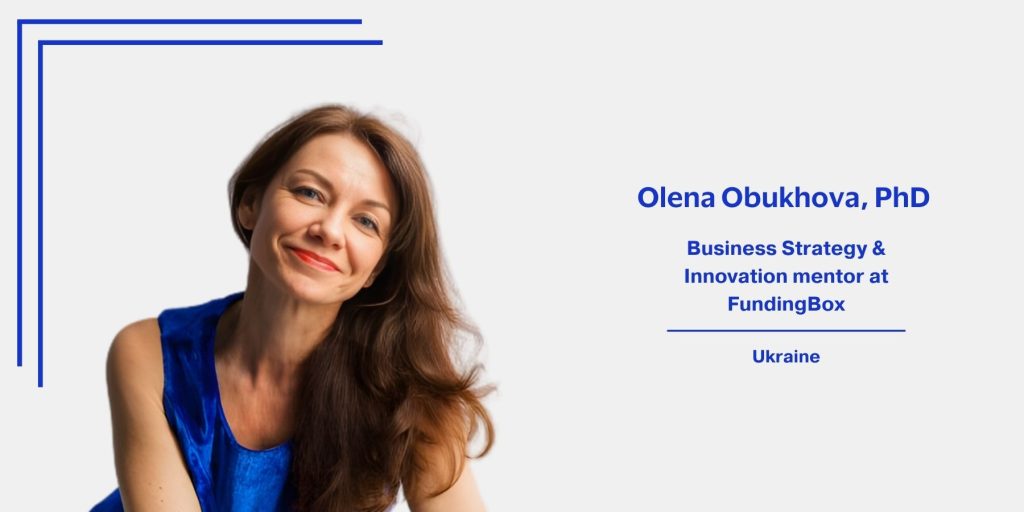
Olena Obukhova, PhD
Olena is an expert in business strategy, innovation, and fundraising, with over 20 years of leadership experience working with international projects and IT startups. She brings hands-on expertise in business scaling, investment attraction, strategic development, and the implementation of Lean methodologies. Today, she mentors in accelerators across Europe and the US, helping entrepreneurs grow, optimise processes, and prepare for investment.
New Free Courses — Made for Ambitious Women Entrepreneurs!
It’s time to grow smarter, adapt faster, and take your business global.
Explore two powerful courses available exclusively to She’s Next members:
The Reinvention Masterclass for Start-up Founders
Beyond Borders: Building for Global Success
Enroll today — it’s free!