
The visibility gap

Why women entrepreneurs in CEE remain underrepresented and how the ecosystem can change this
Judging by the number of start-ups, innovative solutions and new products created by women in Central and Eastern Europe (CEE), one might expect them to hold a visible place in the region’s entrepreneurial narrative. Yet a look at investment reports, expert rankings or media coverage tells a different story: a substantial share of these founders remains largely absent from public view.
This is the visibility gap: a structural feature of the ecosystem that leaves women entrepreneurs undervalued not because their businesses lack quality, but because the system itself has yet to learn how to truly “see” them.
The invisible half of the ecosystem
According to data from Startup Genome and the European Investment Bank, women account for less than 20 per cent of founders within CEE start-up ecosystems. At the same time, companies with women founders attract only a small fraction of the region’s venture capital (often between five and 10 per cent).
These figures are frequently interpreted as a reflection of market realities. However, a growing body of research suggests otherwise: the challenge lies not in a lack of quality, but in a lack of access to media platforms, investment networks and public recognition.
Across CEE, women are actively building businesses in technology, cleantech, life sciences, B2B services and the creative industries. Yet their growth trajectories often unfold without the conventional markers of success that the ecosystem recognises: headline-grabbing rounds, prominent media profiles or highly visible leadership roles.
Visibility is not confidence. It is a system
One of the most persistent misconceptions is that the visibility gap can be solved through greater individual confidence or personal branding. In reality, visibility is an ecosystem-level outcome, shaped by who is invited to comment on market trends, who is trusted as an expert and which entrepreneurial stories are considered representative.
Research published by Harvard Business Review indicates that women founders are more likely to frame their companies around sustainability, resilience and long-term value creation. Investors, however, continue to reward narratives centred on aggressive growth and rapid scaling. As a result, strong businesses may fail to align with the dominant language of the ecosystem and remain overlooked.
In Central and Eastern Europe, this dynamic is particularly pronounced. The region’s start-up ecosystems are relatively young, informal networks play a decisive role and access to these networks often rests on historically male-dominated connections. Visibility thus becomes a form of accumulated capital, one that women tend to access later or not at all.
Three dimensions of the visibility gap
The visibility gap manifests across several interconnected levels.
The first is media visibility. Women entrepreneurs are less frequently positioned as industry experts, particularly in technology, finance and investment. Even successful cases are often framed as exceptions rather than as part of a broader, systemic trend.
Second is investment access. Data from European Women in VC shows that women receive fewer warm introductions to funds, are less present at closed-door industry events and are less integrated into informal deal-making networks, channels that often determine access to capital.
Third is institutional influence. Women with entrepreneurial experience are underrepresented in policy-shaping bodies, expert councils, and advisory groups. As a result, their practical insights rarely translate into systemic economic solutions.
What actually works
Despite the persistence of these challenges, certain mechanisms have demonstrated tangible impact.
First, structured women-led entrepreneurial networks. Programmes such as She’s Next by Visa, EIT Women initiatives, etc and regional accelerators create collective visibility. When women are presented not individually but as part of a professional community, trust among investors, partners and institutions increases significantly.
Second, a shift from storytelling to expertise. Women who enter the public sphere as market analysts, trend commentators and contributors to strategic debates tend to establish lasting visibility more quickly. The ecosystem responds not only to products, but to the ability to interpret and explain complex economic and technological dynamics.
Third, a deliberate visibility strategy. Visibility is not synonymous with self-promotion; it is a structured process involving the selection of relevant platforms, the articulation of a coherent narrative and consistent participation in professional discourse. In this sense, it is as manageable as product development or market expansion.
Why does this matter for the region’s future?
Women’s entrepreneurship is not a matter of representation for its own sake. It is an economic asset. According to McKinsey, narrowing the gender gap in entrepreneurship could significantly accelerate GDP growth. For CEE economies seeking sustainable development pathways, this potential is critical.
Women founders are more likely to build businesses that prioritise long-term resilience, social impact and responsible governance. In an era defined by climate, demographic and geopolitical challenges, these qualities are becoming decisive competitive advantages. Yet without visibility, they remain underutilised.
From invisibility to influence
The visibility gap is not a verdict, but a signal of an ecosystem still in formation. CEE continues to shape its entrepreneurial identity and this moment offers an opportunity to embed a more inclusive and mature growth model.
When women become visible, the benefits extend far beyond individual founders. Markets, investors and societies gain access to more resilient, future-oriented business solutions. Visibility, ultimately, is not about volume. It’s about influence. And today, it is time to make that influence an integral part of the region’s economic agenda.
Author Bio
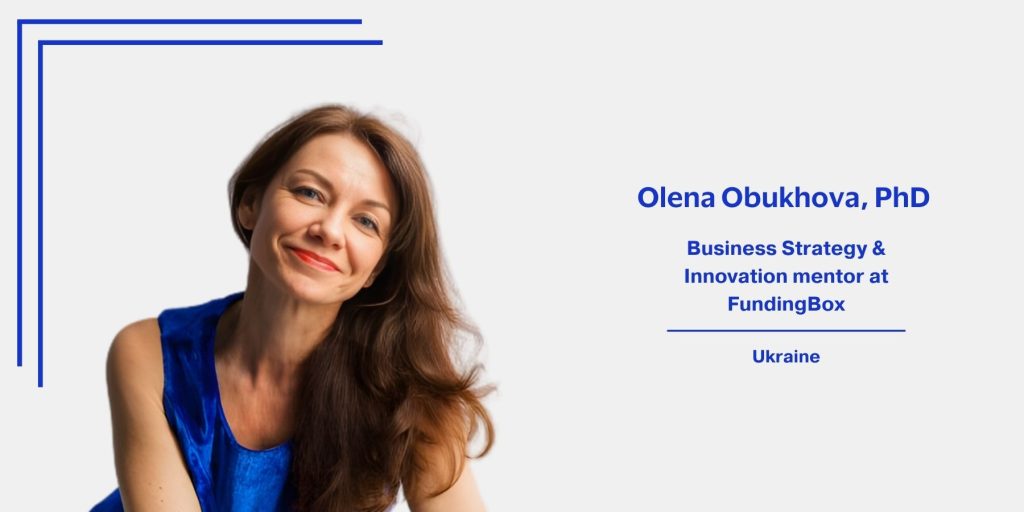
Olena Obukhova, PhD
Olena is an expert in business strategy, innovation, and fundraising, with over 20 years of leadership experience working with international projects and IT startups. She brings hands-on expertise in business scaling, investment attraction, strategic development, and the implementation of Lean methodologies. Today, she mentors in accelerators across Europe and the US, helping entrepreneurs grow, optimise processes, and prepare for investment.
New Free Courses — Made for Ambitious Women Entrepreneurs!
It’s time to grow smarter, adapt faster, and take your business global.
Explore two powerful courses available exclusively to She’s Next members:
The Reinvention Masterclass for Start-up Founders
Beyond Borders: Building for Global Success
Enroll today — it’s free!