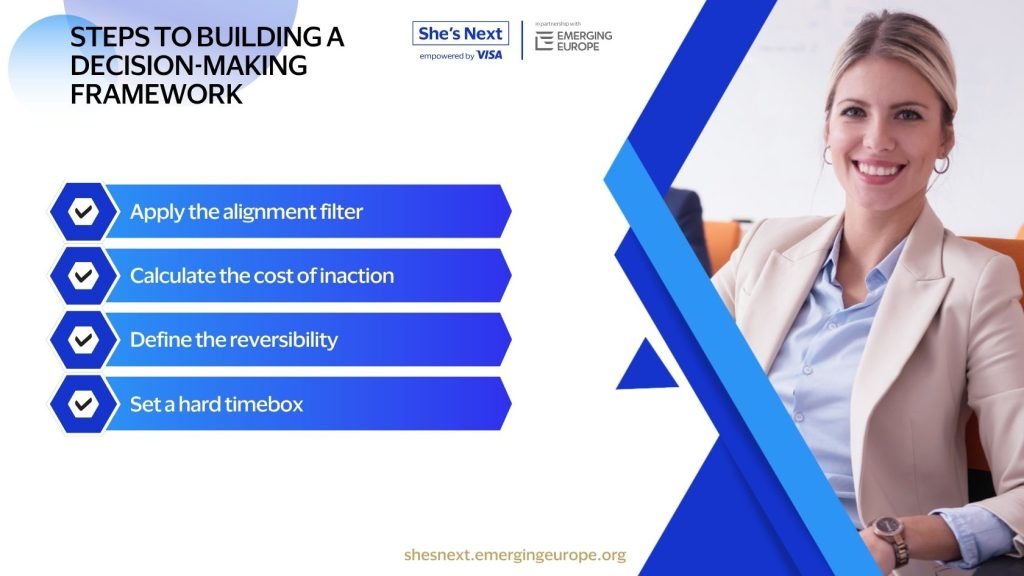


How to Build a Simple Decision-Making Framework for Your Business

Reduce decision fatigue and focus on what matters most
Running a business means making decisions every day. From pricing and hiring to marketing and client requests, the constant stream of choices can quickly become mentally exhausting. Over time, decision fatigue slows progress and makes even simple choices feel difficult.
The solution is not to gather more information—it is to use a consistent process. This guide introduces a simple four-step framework to help you make faster, more objective decisions while protecting your time and energy.
Apply the alignment filter
Every opportunity should support your long-term direction.
Before saying yes to a new project, partnership, or investment, compare it against your business goals for the year. Ask yourself:
> Does this move us closer to our primary objective?
> Does it align with our values and positioning?
> Will this create meaningful progress, or is it simply another distraction?
Many opportunities seem attractive in isolation but pull attention away from what matters most.
If a decision does not support your destination, it is usually better to decline it and remain focused on your priorities.
Calculate the cost of inaction
Founders often spend too much time analysing what might happen if they make the wrong decision. Instead, ask what happens if you make no decision at all.
Could delaying the decision result in lost revenue? Will competitors move ahead? Could your team become frustrated by the lack of direction? Will clients continue experiencing the same problem?
Inaction carries its own risks, and they are often greater than the risks of taking a measured step forward. Considering both sides of the equation leads to more balanced decision-making.