The double shift

Running a tech company whilst building an NGO taught Iva Kozlovksa what women entrepreneurs actually need
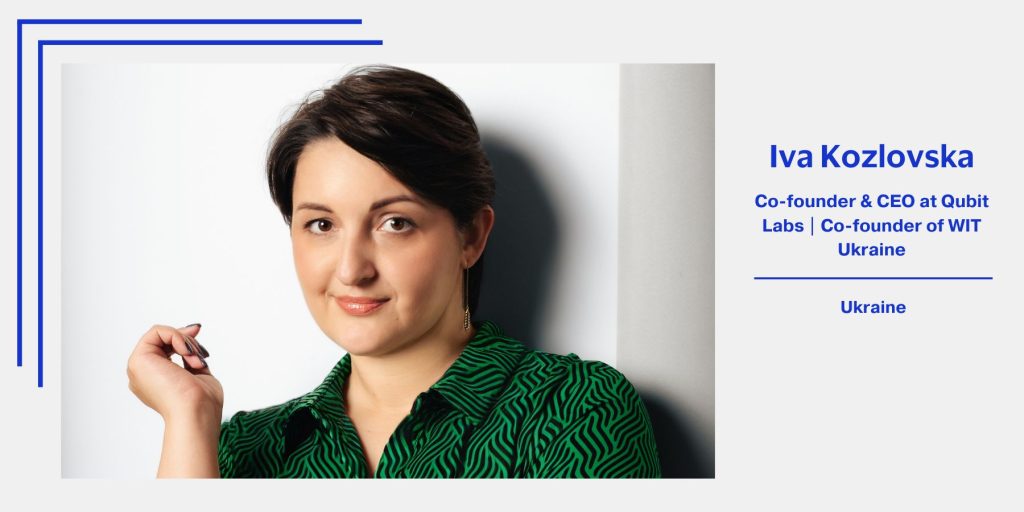
Iva Kozlovksa runs two organisations simultaneously. Qubit Labs, her IT outstaffing company, operates globally across 15 countries after nine years of steady growth. Women in Tech Ukraine, the NGO she co-founded seven years ago, has trained thousands of women for careers they were told weren’t meant for them. Managing both requires a skill many women entrepreneurs resist learning: asking for help.
“My advice to have partners,” she says bluntly. “A lot of women want to. I have a case now with my friend. She had a bad situation with partners in her previous project, and now she’s scared to have partners, and she’s trying to do everything by herself and it’s successful, but it can be faster and bigger if you have partners.” The observation comes from experience. Without her co-founder at Women in Tech Ukraine, the dual workload would have been impossible.
The origins of Women in Tech Ukraine trace to a 2017 visit to Web Summit. Kozlovksa noticed that other countries—Portugal, Sweden—had established communities supporting women in technology. Ukraine had nothing similar. She returned with her partner and a simple conclusion: “We don’t have this. We don’t have any support for women.” At the time, international companies were flooding into Ukraine to hire technical talent. The country couldn’t supply enough workers. Bringing more women into the sector made commercial sense.
Instant success
The first event in Kharkiv drew 400 women. “We immediately saw that a lot of women needed something like this, because they want to have new opportunities, a new career.” Before that gathering, Ukraine’s tech sector was heavily male-dominated, with women comprising only eight per cent of the IT population. By 2022, that figure had climbed to 23.4 per cent, with some sources now reporting 35 per cent of Ukrainian tech workers are women.
Events continued in Kharkiv, Dnipro, Lviv, Kyiv. Then Covid-19 arrived. “We had a pause actually, because we didn’t know how to manage the situation.” Kozlovksa was also busy managing Qubit Labs through the crisis. Many customers faced their own difficulties. The pause lasted until 2022, when Russia’s full-scale invasion changed everything.
The nature of Women in Tech Ukraine’s work shifted fundamentally. “Before, the community was about women wanting to do something new.” After the invasion, the calculus changed. “We started to see women who needed to do something new, because they lost their house, their city, their job and their men had left to fight.”
The distinction between want and need altered the organisation’s approach. Women in Tech Ukraine launched webinars presenting different positions—developers, engineers, designers, marketing people, salespeople. Real specialists explained their work: “I’m a PPC manager, this is my job, I learn this, this is my salary. That’s where you can find opportunities.” The goal was efficiency. “We were trying to present all of the opportunities in the sector to give them understanding.”
A mentorship programme followed, running once every two months. Different areas—product management, development, marketing, HR, recruitment. Women could speak directly with specialists, ask questions, search for jobs. An education platform emerged with online courses and certificates. Then came more ambitious projects: an inclusive programme educating companies on hiring veterans, a collaboration with Greenpeace Ukraine training women to install and repair solar panels (critical during blackouts).
Entrepreneurial challenges
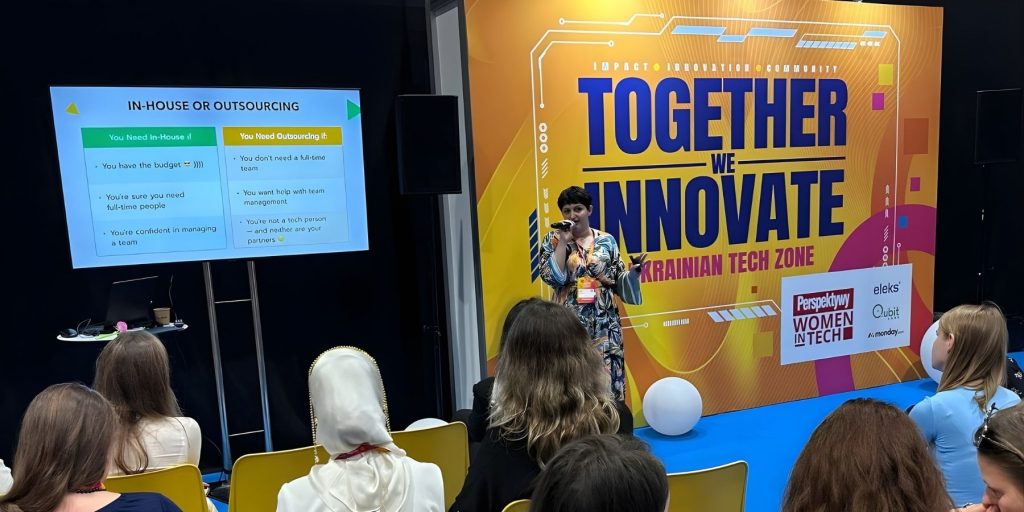
Kozlovksa’s mentoring work at the She’s Next hackathon revealed the breadth of entrepreneurial challenges. She had four sessions with completely different requests. Some participants didn’t understand how to build teams—what salaries to offer, how difficult hiring would be. Others asked about globalisation: projects that started locally but needed international expansion. Some wanted guidance on legal structures. The diversity of questions reinforced a lesson: expertise has limits, networks matter more.
On mentorship itself, Kozlovksa holds strong views. “Mentorship is so important in education because you can have a practiced and experienced person help you navigate, show you where there are risks, where there are opportunities.” The benefit flows both ways. During one interview about Ukrainian green technology, she realised her own knowledge was lacking. “I understood that I don’t know about green technology at all and it was a ‘wow’ moment: This is such and important part of our lives and I don’t know anything about this.” She found solutions. Qubit Labs now works in green technology.
The question of whether women need female mentors specifically draws a nuanced response. “It’s important when women are examples for other women but we have men as manetors too, we don’t discriminate!” Choice is paramount. Women in Tech Ukraine offers a social mentorship platform where mentors maintain profiles and portfolios. “People can then choose themselves who they want to be their mentor. Men, women, it doesn’t matter. What matters is experience, and that women are able to choose.”
Networks open doors
For aspiring women entrepreneurs, Kozlovksa’s advice is direct. First: “Give yourself a chance.” She acknowledges the fear and the risk. She has opened and closed five companies in her life. “Even failing is a great experience.”
Second: confidence. “Women should be more confident in themselves. And if they have questions for experts they don’t know personally, they shouldn’t be shy to connect on LinkedIn and ask for advice.” She would happily provide advice if asked. Most people don’t ask. “They are shy because they think it’s not polite to disturb. You should disturb. Be confident and ask the question.”
Third: network. “Network in business is very important. If you have the opportunity to attend conferences, if you know people who know people you need, start communicating with them.” The reasoning is pragmatic. “You can’t do everything, you can’t know everything. So you should have somebody around who can help you.”
Fourth, and perhaps most important: partners. The advice loops back to where it began. One friend had a bad experience with partners and now attempts everything alone. The business succeeds, but progress is slower and smaller than necessary. “It can be better and happen faster if you have partners.”
The lesson applies to Kozlovksa’s own situation. Qubit Labs and Women in Tech Ukraine both demand substantial time and energy. Running them simultaneously without partnership would be impossible. The irony is clear: an organisation teaching women to enter technology only exists because its founder understood she couldn’t build it alone. The insight seems obvious once stated, yet many women resist it.
Kozlovksa’s dual role—profit-driven company and mission-driven NGO—offers a template. Commercial success funds social impact. Social impact builds the talent pool that commercial enterprises require. Partners make both possible. Mentors guide the path. Networks open doors. Confidence gets people through them. The formula sounds simple because it is simple. Execution remains hard. But the evidence sits in those 400 women who showed up in Kharkiv seven years ago, and the thousands who have followed since.
New Free Courses — Made for Ambitious Women Entrepreneurs!
It’s time to grow smarter, adapt faster, and take your business global.
Explore two powerful courses available exclusively to She’s Next members:
The Reinvention Masterclass for Start-up Founders
Beyond Borders: Building for Global Success
Enroll today — it’s free!