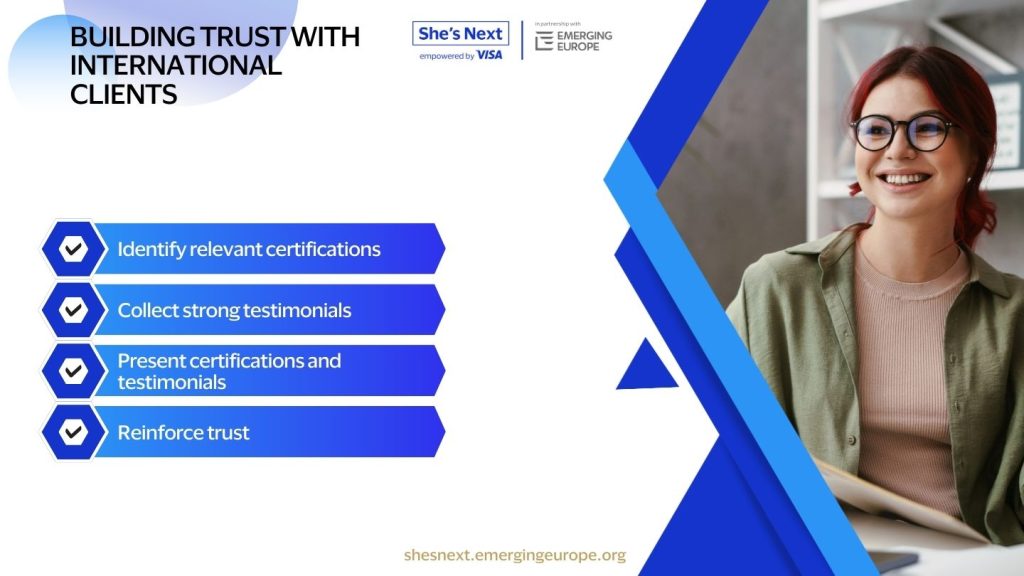


Building Trust with International Clients: A Step-by-Step Guide

When clients come from another country, trust doesn’t happen by default. They may not know you personally, understand your local market, or feel confident about legal and cultural differences.
That uncertainty can slow decisions — or stop them altogether. This is where certifications and testimonials matter. They act as visible proof that you’re credible, capable, and reliable. This guide shows how to build international trust step by step, even if you’re new to global markets.
What international clients look for as “Trust Signals”
International clients rely more on formal signals than local ones. They can’t meet you in person or lean on word-of-mouth, so they look for proof that reduces risk.
Common trust indicators include:
> Recognised certifications
> Professional memberships or affiliations
> Clear client testimonials or case examples
> A consistent, professional online presence
The key mindset shift: trust isn’t only about how good you are — it’s about how safe and predictable it feels to work with you.
Identify relevant certifications for your industry
Not all certificates carry the same weight. What matters is relevance and recognition.
There are three main types:
> Industry certifications (standards or accreditations specific to your field)
> Quality or compliance certifications (process, safety, or data-related)
> Skills or platform-based certificates (proof of tools or methods you use)
Choose certifications that are internationally recognised, align with what clients expect, and are realistic in time and cost. One strong, relevant certification builds more confidence than a long list that’s hard to interpret.