
How to Navigate Language Barriers and Communicate Effectively with International Clients

Language differences are one of the most common worries for entrepreneurs working with international clients. The fear of being misunderstood — or sounding “unprofessional” — can hold businesses back from global opportunities. But effective communication doesn’t require perfect fluency. What it does require is clarity, structure, and the right tools. With simple processes in place, you can communicate confidently across languages and cultures — and build strong, professional relationships.
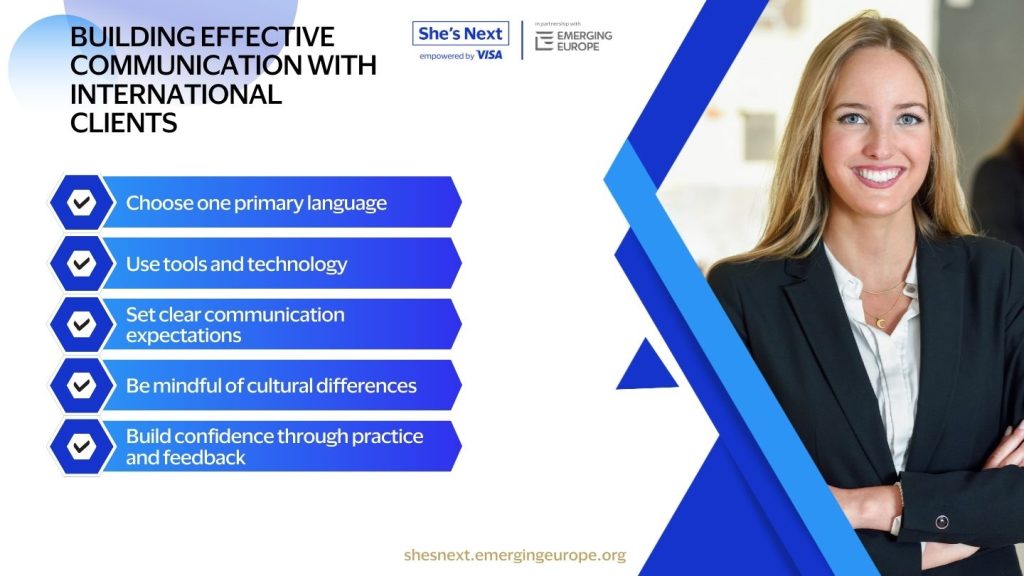
Focus on clarity, not perfection
International clients value reliability and understanding far more than advanced language skills.
Clear communication means:
> Using short, direct sentences
> Avoiding slang, idioms, or culturally specific expressions
> Stating expectations plainly
When something matters, confirm understanding: a short recap or follow-up question can prevent costly mistakes. Simple language isn’t a weakness — it’s a strength in cross-border business.
Choose one primary language for business communication
Consistency reduces confusion.
Agree on one main working language for:
> Contracts and proposals
> Emails and key documents
> Invoices and payment terms
Even if clients speak different languages, a single agreed business language keeps records clear and lowers legal and operational risk. It also saves time as your business grows.
Use tools and technology to support communication
Technology can significantly ease language gaps when used wisely.
Helpful options include:
> Translation tools for emails and documents
> Grammar and clarity-check tools
> Video calls to complement written communication
Always review automated translations before sending. Tools should support your judgment — not replace it. When in doubt, clarity and simplicity win.