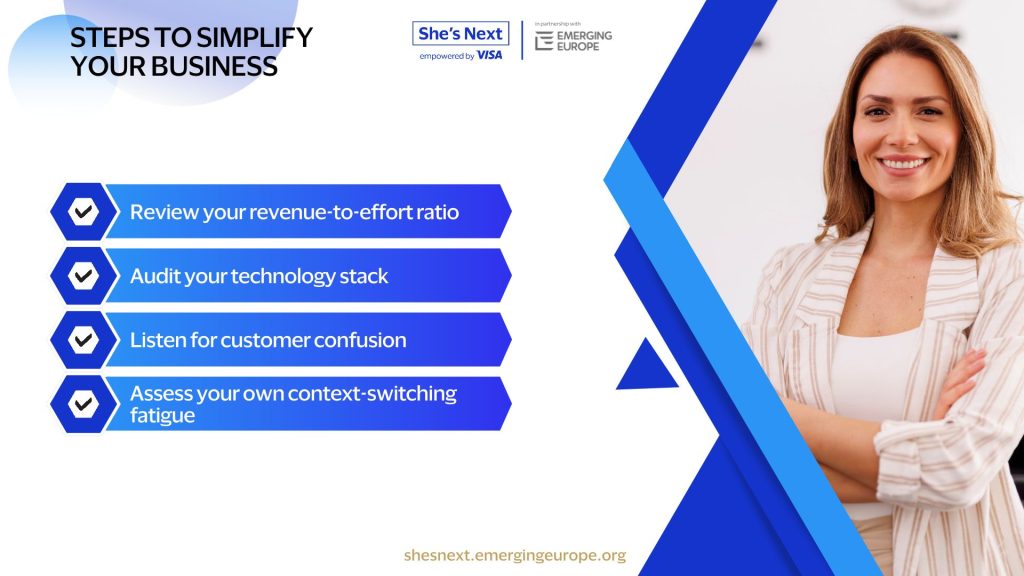


How to Recognise When It’s Time to Simplify Your Business

Reduce complexity to create stronger, more sustainable growth
In the early stages of a business, growth often means adding more—more services, more software, more marketing channels, and more processes. Over time, however, this accumulation creates hidden friction that slows progress instead of accelerating it.
Complexity is a silent profit killer. It consumes time, drains energy, and creates confusion for both your team and your clients. This guide highlights four warning signs that your business may have become unnecessarily complicated, along with practical steps to simplify and refocus.
Review your revenue-to-effort ratio
Not every product or service contributes equally to your business.
Take time to analyse everything you offer. Which services generate the greatest revenue with the least effort? Which ones require constant customisation, lengthy communication, or ongoing troubleshooting while contributing very little to your overall income?
Pay particular attention to offerings that consume a disproportionate amount of your time or emotional energy.
Simplifying your portfolio often improves profitability because your team can concentrate on delivering fewer services exceptionally well instead of many services inconsistently. High effort combined with low financial return is one of the clearest signs that it is time to simplify.
Audit your technology stack
Technology should reduce complexity, not create it.
Review every software subscription, platform, and internal workflow your business relies on. Ask whether each tool genuinely improves efficiency or simply adds another layer of administration.
Common warning signs include:
> Entering the same information into multiple systems.
> Maintaining several spreadsheets alongside specialist software.
> Frequently switching between disconnected applications.
> Paying for tools that duplicate one another’s functionality.
Where possible, organise your workflows around a smaller number of integrated platforms. A connected digital ecosystem reduces errors, saves time, and makes it easier for everyone to work consistently.