
For over two decades, Nadera Alsukkar managed complex operations in some of the world’s most volatile conflict zones. Born during the outbreak of the Bosnian war to a Bosnian and Jordanian family, she experienced displacement firsthand, igniting a lifelong passion for human rights.
Armed with a degree in actuarial science and early experience volunteering with the Red Cross, she carved a unique path leading crisis responses in Syria and Iraq.Her crucible in leadership came while managing the White Helmets operations for Mayday Rescue, culminating in a highly complex, internationally celebrated evacuation of her team under severe military and diplomatic threat.
Through these high-stakes environments, Alsukkar discovered that true leadership isn’t about rigid planning, but understanding how to keep a team focused when forced to pivot under immense pressure. She also realised that calculating risk in a crisis requires looking beyond immediate relief to consider long-term sustainability and values.
Despite her formidable resume, Alsukkar has intimately navigated the hurdles women face when seeking professional support. She recalls a male colleague dismissing her operational vision by telling her, “you plan like a Barbie”. This ingrained bias, combined with the internalised pressure women feel to have all the answers, makes asking for help incredibly daunting. “We’re either we think we’re not allowed to ask because we should know the answer, or we’re not taken seriously,” she notes.
Determined to change this, Alsukkar recently founded We Lead Next, a platform designed to democratise access to expertise and mentorship for young founders in the Balkans and the Middle East. She argues that the corporate world is still clinging to post-industrial management theories built for predictable manufacturing, which are entirely ill-equipped for an era dominated by rapid AI advancements and global uncertainty.
Her start-up aims to gather experts in fields like fintech, deep AI, and biotech to build entirely new, community-driven ways of doing business.Reflecting on her demanding career and the reality of burnout, her advice to female entrepreneurs is surprisingly gentle. “Take it lightly,” she urges, emphasising the importance of prioritising yourself and leaning into supportive communities. “Change happen one small effect after another, not dramatically. So slow down that’s the most important thing”.
A crisis communication plan is a strategic framework for managing communication during unexpected events that could harm a business. Whether it’s a product recall, data…
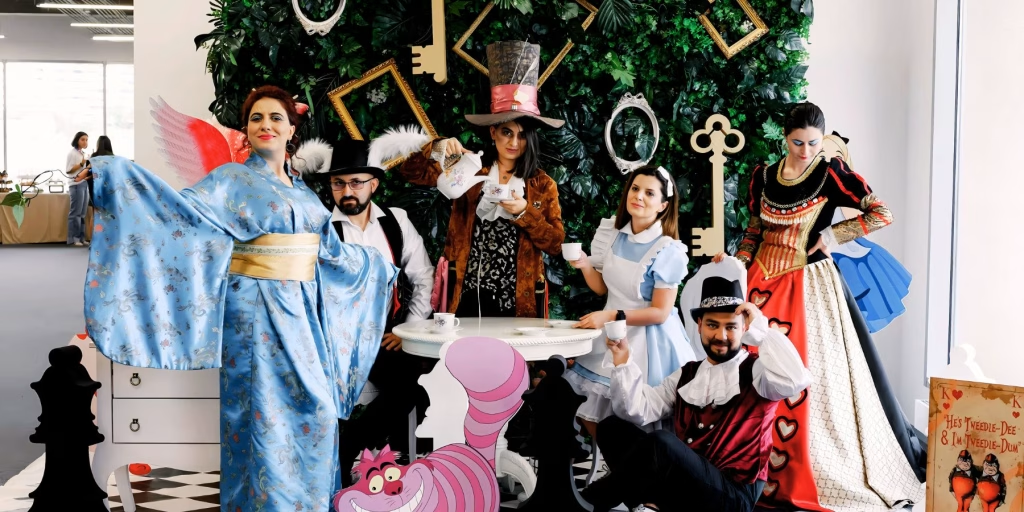
Arevik Abrahamian transformed a pandemic career disruption into opportunity, co-founding TUZ Creative Agency in Armenia. Now she’s championing female leadership in a culture where women’s…

All Ukrainian businesses face challenges due to Russia’s ongoing war, but their impact is often greater on female-led businesses. Women entrepreneurs in Ukraine face significant…

Oksana Antonova built a career in agricultural market research during Ukraine’s turbulent economic transition. Now as CEO of AgriStatis, she leads research across three countries…

Despite the daunting challenges posed by Russia’s aggression, female entrepreneurs in Ukraine are demonstrating an admirable level of resilience and adaptability. From financial gains and…

Please note:
This action will also remove this member from your connections and send a report to the site admin.
Please allow a few minutes for this process to complete.