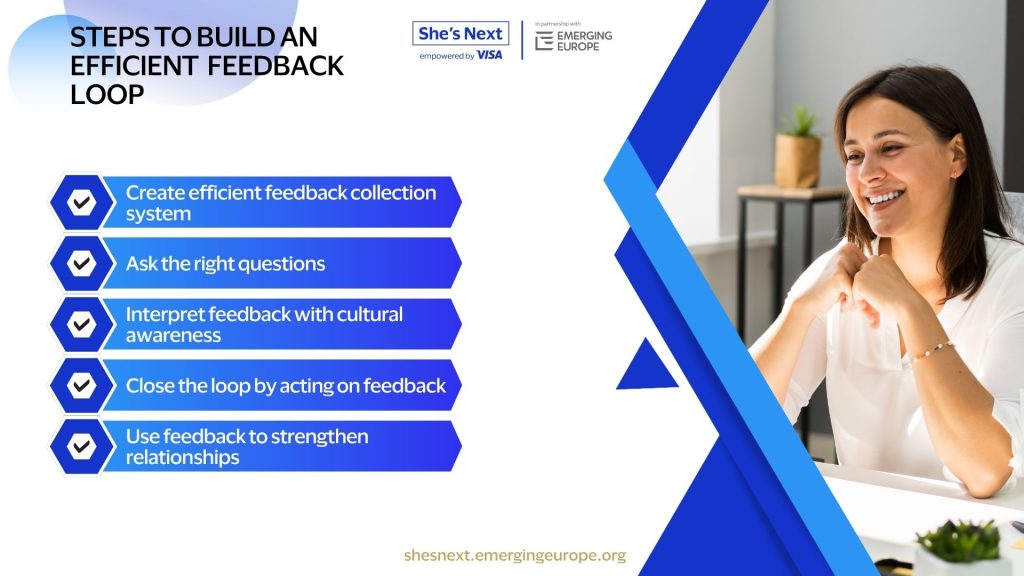


The Importance of Feedback Loops: Listening to International Clients

When you work across borders, assumptions are costly. Feedback helps replace guesswork with insight — building trust while improving what you offer.
International clients bring different expectations shaped by culture, market norms, and experience. Without a clear way to listen, small issues can turn into misunderstandings. With it, relationships deepen. This guide shows how to create simple feedback loops that help you learn faster, communicate better, and strengthen long-term international partnerships.
Understand what a feedback loop is
A feedback loop is not a one-off question — it’s an ongoing, two-way process.
It starts with listening, but it only works when insight leads to action. Regular feedback helps you spot gaps early, refine how you work, and show clients that their perspective matters. The key takeaway: feedback isn’t about approval — it’s a practical tool for improving collaboration and results.
Create simple and accessible ways to collect feedback
The easier feedback is to give, the more useful it becomes.
Effective options include:
> Short follow-up emails after meetings or deliveries
> Quick calls or voice notes for clarification
> Simple surveys at key milestones (project completion, delivery, renewal)
Keep questions short and clear. Be mindful of language differences and time zones. Respect your client’s time — clarity encourages participation.