
How to Prepare Your Business For AI Adoption Without Technical Expertise

You do not need a computer science degree to harness the power of Artificial Intelligence.

Yet for many founders, AI still feels complex, expensive, and out of reach. This hesitation creates risk. While some businesses experiment and adapt, others fall behind.

The reality is simpler: AI is not about technology first—it is about solving problems. For entrepreneurs operating with limited time and resources, the right approach can unlock efficiency and growth. This guide breaks it down into five practical steps.

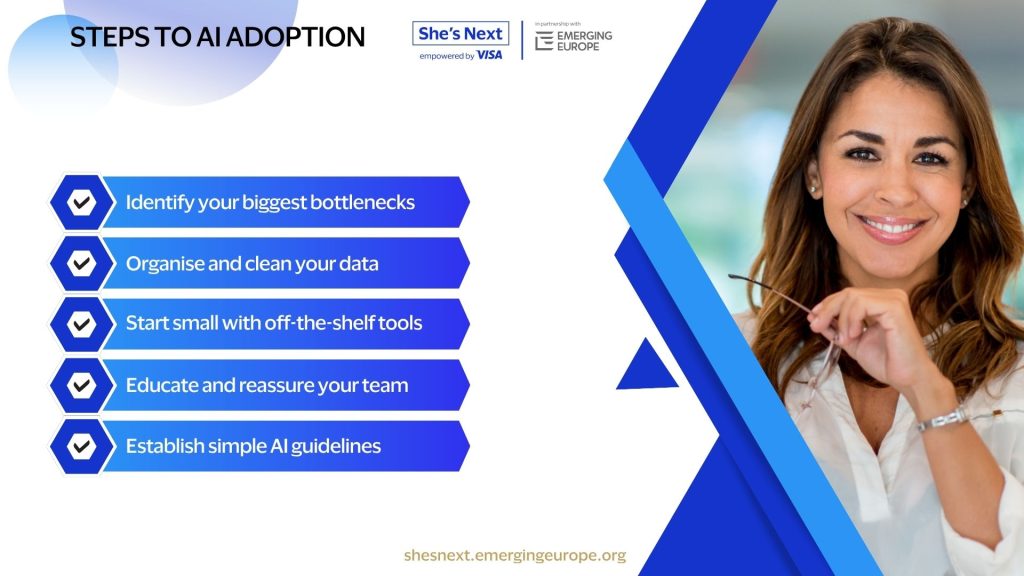
Identify your biggest bottlenecks

AI is not a trend to follow. It is a tool to solve friction. Start by identifying where your time is being lost. Map out repetitive, manual tasks across your business.

For example:

> Sorting customer emails

> Updating spreadsheets

> Writing routine social media posts

These are your best opportunities for AI support. Clarity here ensures you adopt tools that actually improve your workflow—not complicate it. Organise and clean your data

AI is only as useful as the information it receives.

If your data is scattered, outdated, or inconsistent, your results will be unreliable. Take time to standardise how you store information. Clean your customer lists. Centralise key documents. Ensure your CRM or spreadsheets are accurate.

This step may feel basic, but it is foundational. Without it, even the best tools will fail to deliver value. Start small with off-the-shelf tools

You do not need to build anything from scratch.

The easiest way to adopt AI is through tools you already use—or can learn in minutes.

Start with simple applications:

> Use generative AI to draft emails or marketing copy

> Explore AI features in design tools like Canva

> Use accounting tools that automatically categorise expenses

This approach reduces risk and builds confidence. It also reflects a broader trend: digital tools are helping women entrepreneurs scale efficiently, even with limited resources. Educate and reassure your team

AI adoption is not just technical. It is emotional.

Your team may worry about job security or feel intimidated by new tools. Address this early.

Position AI as an assistant, not a replacement. Show how it removes repetitive tasks—freeing time for creative, strategic work. A short, informal training session can make a significant difference in adoption and trust. Establish simple AI guidelines.

With new tools comes new responsibility.

Public AI platforms learn from the data you input. That makes clear guidelines essential.

Create a simple one-page policy:

> What data can be used

> What must remain confidential

> What tools are approved

This protects your business and ensures compliance with data protection standards such as GDPR.

Preparing for AI is not about mastering code. It is about understanding your processes and improving them step by step.

Start this week: identify one repetitive task and test a simple AI tool to support it.

Related Articles