
Understanding International Payment Systems and Ensuring Secure Transactions

Selling beyond borders is no longer a “later” move for women-led businesses — it’s often how growth begins.
Whether you’re serving international clients, running an online shop, or offering digital services, payments sit at the heart of trust and cash flow. Yet many founders worry about high fees, slow transfers, fraud, or simply not knowing which option to choose. The good news? International payments don’t have to be complicated. With the right basics in place, they can be safe, predictable, and business-enabling.
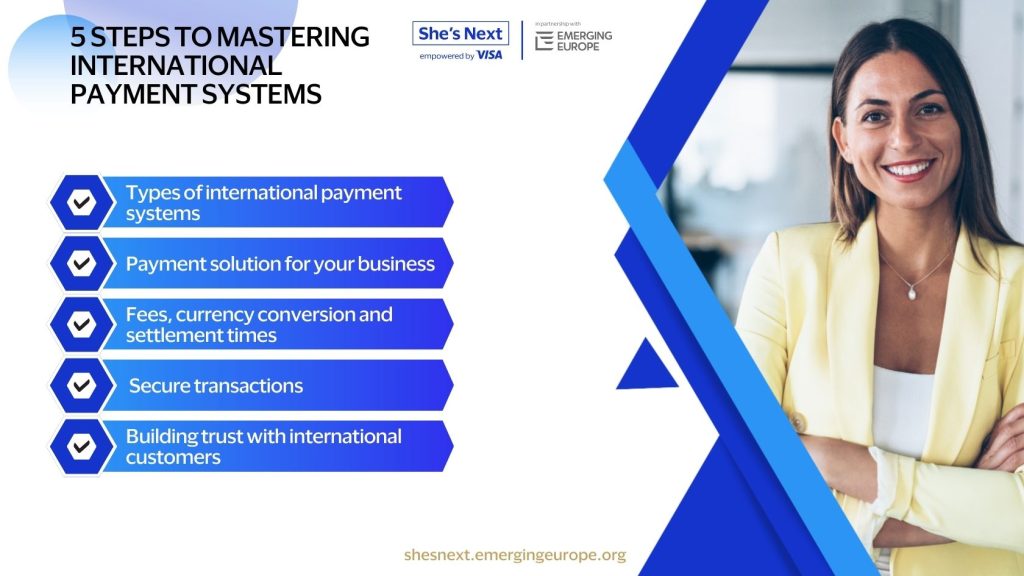
Understanding the main types of international payment systems
Start by knowing your core options — no technical deep dive required.
Card payments (credit/debit): Ideal for online sales and international customers who value speed and convenience.
Digital wallets & payment platforms: Popular for cross-border e-commerce and services; often easy to set up.
Bank transfers / international wires: Common for B2B services or larger invoices, but slower and sometimes costlier.
Local payment methods: Region-specific options that boost conversion in certain markets.
Each differs in speed, cost, and customer experience — the right choice depends on how and where you sell.
Choosing the right payment solution for your business
The “best” system is the one that fits your reality today.
Consider:
> Where your customers are based
> Average transaction size and frequency
> Supported currencies and payout locations
> Fees and exchange rates
> Ease of setup and daily use (especially for small teams)
A smart approach is to start with one reliable solution, master it, and expand later as your international sales grow.